
How We Change
Some help from the late David Powlison

Happy Saturday, friends. Don’t forget to take a look at a couple of recommended articles after today’s devotional to serve your weekend reading. Blessings. - Zak
I’m prepping right now to teach an adult Sunday school class on sanctification, basing it largely off of material from David Powlison’s class Dynamics of Biblical Change and the book How People Change by Timothy Lane and Paul Tripp. To keep my head in that space, I’ve been re-listening to some of Powlison’s class lectures. The other day, he said something that reminded me of how impactful this material was as I experienced it for the first time last year.
When it comes to pursuing change in the Christian life, Dr. Powlison suggested there are two primary paths evangelicals tend to teach. The first is: you change by beholding Christ. You behold the cross and God’s sacrificial love. This isn’t untrue. My mind immediately goes to 2 Cor. 3:18 - “And we all, with unveiled face, beholding the glory of the Lord, are being transformed into the same image from one degree of glory to another. For this comes from the Lord who is the Spirit.” We behold the glory of the Lord and we are changed. And yet…biblical change cannot be boiled down to merely beholding.
The second way is: you change by remembering. Remember that you belong to Christ. Remember that you are justified. Remember that you are a son/daughter of God. Remember the gospel. Again, there is truth to this. We are prone to functionally forget these realities. “Reminding” is one of the tools the Apostle Peter wields to help Christians who have lost sight of their identity in Christ (2 Peter 1:9, 12–15). And yet…biblical change cannot be boiled down to merely remembering.
Powlison argues that beholding and remembering are mental acts. If left to themselves, they become passive acts. We cannot stop at merely seeing. “We need to see it and we need to seek it.”1 The essence of that sentence, which is gloriously unpacked throughout Dynamics of Biblical Change, changed my life. Because it forced me to engage with a biblical principle that served as the foundation for most of Dr. Powlison’s ministry (as I understand it), which is this:
Change is always relational.
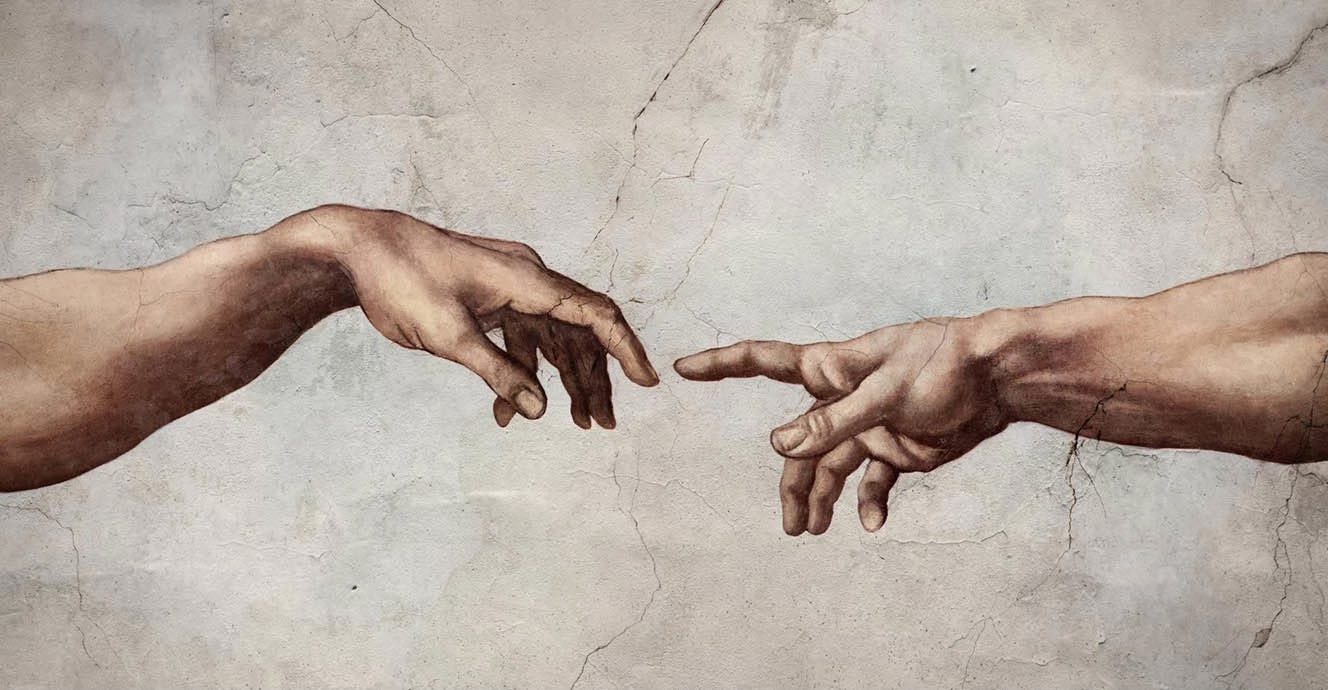
Or, if we wanted to put it in the sentence structure above: you change by relationship. You change by entering into what Powlison calls “intelligent conversation.” That’s what prayer is - an intelligent conversation with the Triune, Personal God. You see him and hear him in his word, yes. You call to mind true things about him, of course. And then you go to him. You speak to him. You seek him. What Dr. Powlison helped me see is that I spent (and am still tempted to spend) most of my Christian life knowing about God as a doctrine and avoiding him as a Person. By default, I stiff-arm the God who loves me and try to keep segments of my heart from him. I am happy to know much about him. I am happy to trace biblical themes and narrative structures and to write position papers. But to open up my heart and actually speak to him? To deeply, honestly, and regularly confess my sin to him and acknowledge my idols to him and to ask the Spirit’s help in resisting them? That feels too vulnerable. Too personal. It’s far easier to keep God safely at a distance. Let’s keep it professional, thank you.
But God is after my heart. He wants me. It’s wonderful and terrifying at the same time. Writing these words brings tears to my eyes as I think about the God who is so holy and so good wanting a real and deep relationship with me, a sinner. How could he? Why would he? But he does.
One of the ways Dr. Powlison convinced me of this was by drawing my attention to the Psalms where David and the other psalmists talk directly to God. They pull no punches. They expose their hearts to him. They complain. They wrestle. And in so doing they come to a depth of praise, delight, and love that seems otherworldly. Even when God feels distant to them, they are always prayerfully moving towards him.
This is how we change and how God changes us. God pursues us and we move towards him. We are active and involved - seeking, pleading, asking, praising. The pursuit of change becomes more relational and less formulaic, and God himself becomes more and more the Lord and Delight of our hearts.
If this sounds foreign to you, I would encourage you to start by praying the psalms. Pay attention to the language and use them as a guide for how to speak to your King. Become acquainted with how the psalmists have an intelligent conversation with the Lord…and then strive to have similar conversations with the Lord yourself. Bring him your cares, but also bring him your idols. Seek his help in identifying what is ruling your heart and press into the grace that promises not only to forgive you, but to free you.
You are loved - by the personal and present God.
The ZakStack for 3/28
When Your Spouse Stops Being Your Project by Tim Challies
Speaking of pursuing change, here’s a pitfall we often fall into: focusing on our spouse’s need to change rather than our need to change. I admired Challies’es’s honesty here.
“One of the most affecting things I have ever learned about marriage is also one of the most obvious: We marry an entire person. We don’t marry someone who has only strengths or only weaknesses; we don’t marry someone who has only a body or only a soul; we don’t marry someone who has only the history we have made together, but also the history that came before we knew and loved one another. By marrying another person, we have joined ourselves to a being who is wonderfully complex. By focusing narrowly on a particular area of weakness (or perceived weakness, as the case may be) there is a sense in which we lessen the other person’s personhood, reducing them to only one small factor, one tiny part of a much bigger whole. We define them and our relationship to them by this one holdup, this one hangup, this one weakness. It is highly insulting, highly inappropriate, and highly unfair.”
The Will of God Isn’t a GPS by Trevin Wax
This is a wonderful picture of how biblical wisdom works. We want Scripture to function like a GPS. But it’s far more like a map. Which requires our intelligent, intentional involvement in the process (are you sensing a theme in today’s post? The Christian faith does not run on autopilot).
“Craig Bartholomew describes wisdom as knowledge of “the paths that lead to life, shalom, and flourishing”—a map that helps us know the landscape so we can live in line with the grain of the created order. A map isn’t a GPS. A GPS dictates every turn. Stay in the second lane. Turn right at the next light. You have arrived at your destination. The Bible doesn’t work that way. It gives you a lay of the land, not step-by-step instructions.”
How Do I Care for Someone Who Is Grieving? by Ed Welch
In my church right now, we are grieving the death of a brother who left behind a wife and young children. It’s been a heavy couple of weeks (and it will continue to be heavy for many of us who knew him and know his family). I shared this video with some of our Life group leaders this week to aid them in conversations related to grief. Ed Welch is so helpful on this topic.
Note: I am using an Amazon affiliate link for the book mentioned above. I may on earn on qualifying purchases, which is a free-to-you way of supporting this newsletter.
Thank you again for reading my little newsletter, The SubZak. All of the articles I post are free and available to anyone to read. Please subscribe below (for free!). I write regularly on books, faith, and film. If you find this newsletter helpful and want to support my writing, consider becoming a paid subscriber. You can also leave a one-time show of support on my Buy Me a Coffee Page.
David Powlison, Dynamics of Biblical Change, CCEF Lecture: “Understanding the Person - Part 3”
To be clear: Powlison is, I think, being a bit controversial by intention here. He was a biblical counselor. His entire framework for understanding the human heart and sanctification was rooted in the Bible. He embraced the importance of knowing the Bible well (which means a lot of beholding) and calling to mind Scriptural truths (which means a lot of remembering). So if you’re not familiar with David Powlison’s writing/teaching, please don’t think he was anti-Bible reading or anti-gospel. Far, far from.